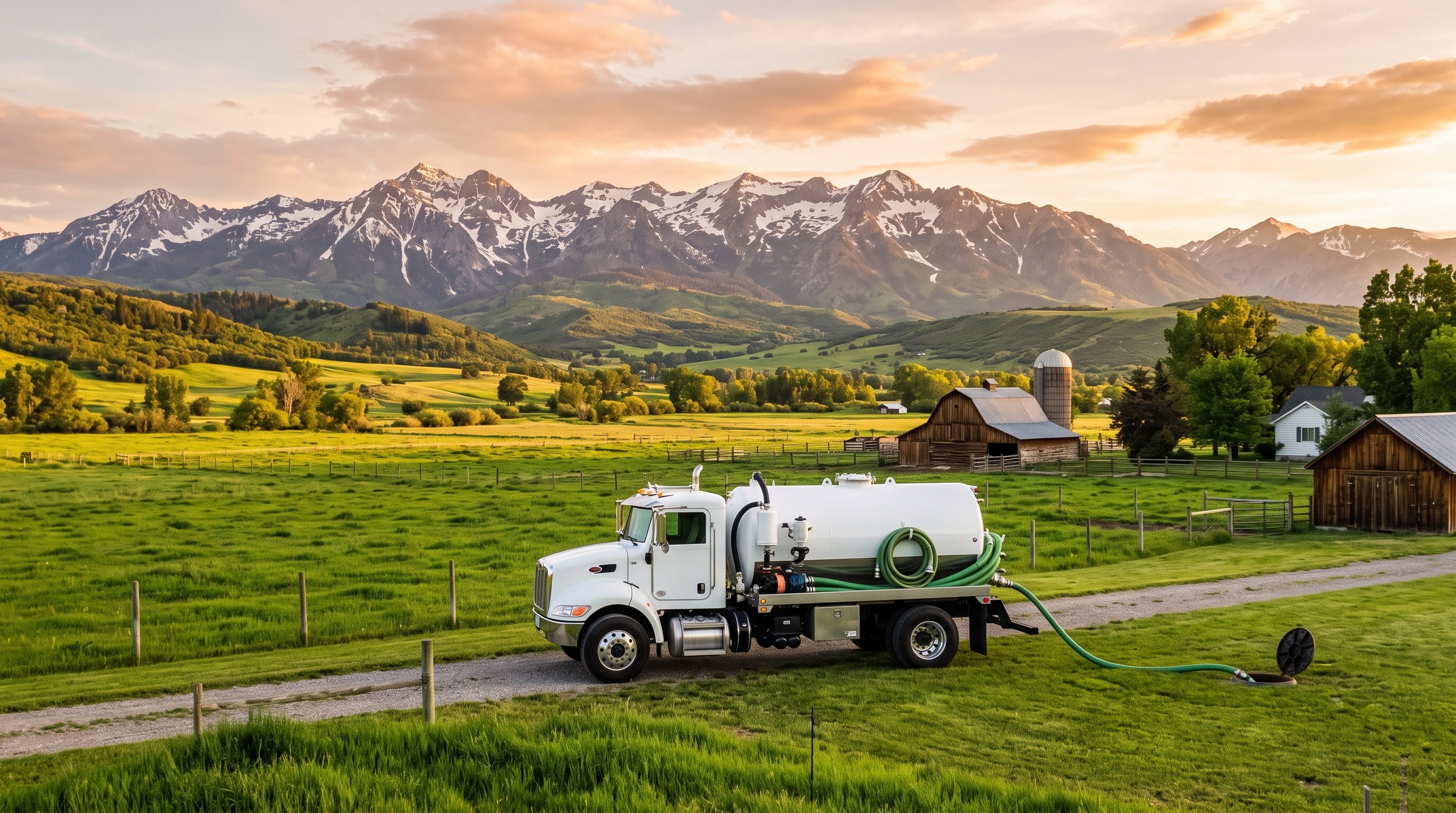
A new septic system is one of the bigger investments a rural property will ever need, and getting it right starts long before any digging — with soil tests, a design matched to the land, and county permits. Whether you're building on new acreage near Jordanelle, replacing a system that's finally given up, or subdividing in the fast-growing Heber Valley, this guide covers how a new system is designed and installed, what it costs, and how to vet an installer. Our phone estimates are free.
Which system your land actually needs
There's no single "septic system" — the right design depends on your soil, your water table, your lot size, and how close you are to a stream or reservoir. The soil and site tests come first precisely because they decide which of these you're even allowed to build:
| System | Best where | Relative cost |
|---|---|---|
| Conventional gravity | Good soil, deep water table, room to spare | Lowest |
| Chamber / pressure-dosed | Tighter lots or soil needing even distribution | Moderate |
| Mound / engineered | High water table, shallow soil, or rocky ground | Highest |
| Advanced treatment unit | Sensitive sites near water, strict setbacks | Highest |
In much of the Heber Valley — especially low ground near Midway and the river bottoms where groundwater sits high — a simple gravity system won't pass, and an engineered or mound system is what the soil actually allows. That's not an upsell; it's what the site test dictates. A good installer designs to the land and the code, not to whatever's cheapest to put in the ground.
Building a system in the Heber Valley
Few places make site conditions matter as much as this valley does. A design that works on a dry bench above town is the wrong design for wet ground near the river — and the county won't permit the wrong one. What shapes a new system here:
- Soil and perc testing. Before anything is designed, test pits and a percolation test show how fast water moves through your soil and how deep the groundwater sits. On the valley floor, a high water table often forces a mound or engineered design; on a good bench, a conventional system may pass.
- Reservoir and stream setbacks. Lots near the Provo River, Deer Creek, and Jordanelle carry setbacks that protect the drinking-water watershed, which affects where a drain field can go and sometimes the level of treatment required.
- Frost depth in the design. At 5,600 feet the system has to be laid deep enough and insulated well enough to keep working through months of hard freeze — a real design factor, not an afterthought.
- Rapid growth. Wasatch County is booming, and a lot of new construction on acreage means new systems going in where there's no sewer to connect to. New lots and subdivisions need their own designed-and-permitted septic.
- Rocky Midway ground. Rocky, shallow soil in parts of the valley makes excavation and system choice its own challenge — one more reason local experience beats a generic plan.
What a proper new-system install includes
A new system is a permitted, engineered project — not a hole and a tank. Done right, it runs through these stages, and a corner-cutting bid skips the early ones that keep you legal and out of trouble:
- Site and soil evaluation. Test pits and a perc test establish what the ground will accept — the foundation of the whole design.
- System design. A design sized to the home's bedrooms and the soil, choosing conventional, chamber, or engineered as the site requires.
- County permitting. Plans are submitted to Wasatch County Environmental Health for a construction permit before any excavation — the step that keeps the system legal and sellable.
- Installation. Tank set, drain field or mound built to the approved design, at the right depth for frost, with proper bedding in rocky ground.
- County inspection and final. The county inspects the work before it's covered, and the system is documented with an as-built you'll want when you sell.
The steps a cheap bid skips are the tests, the permit, and the final inspection — and an unpermitted system is exactly the kind of thing that surfaces at sale and blows up a closing.
What does a new septic system cost in Heber City?
A new system is a five-figure project in most cases, and the range is wide because the design does most of the driving — a conventional gravity system on good soil is a different animal from an engineered mound on wet ground. Site work, tank size, permits, and access all move the number. National guides like HomeAdvisor's septic installation cost data show the same spread.
| Component | Typical range* |
|---|---|
| Soil / perc testing | $300 – $1,000 |
| Design & county permit | $500 – $2,500 |
| Conventional system installed | $8,000 – $18,000 |
| Engineered / mound system | $15,000 – $35,000+ |
*Ballpark ranges for the Heber Valley. A high water table, rocky ground, advanced treatment near reservoirs, and long rural access push toward the high end. Your written on-site quote is the only number that applies to your project.
Because the design decides so much of the cost, a real number only comes after the soil test tells everyone what the land will accept. Be wary of a low bid offered before any testing — it's quoting a system your site may not be allowed to have. The only figure that matters is a quote for your actual lot, which is why the estimate is free.
How to vet any septic installer (including us)
A new system is a big, permanent purchase, so vet the installer hard:
- Do you start with a soil and perc test before designing or quoting?
- Are you designing to my site and the code, or selling one system to everyone?
- Do you pull the Wasatch County permit and handle the final inspection?
- For wet valley-floor ground, why this design over a mound or engineered system?
- Are the crews licensed and insured, and do I get the as-built and permit paperwork?
A serious installer talks about soil and setbacks before price. Anyone who quotes a whole system over the phone without seeing the ground hasn't designed anything yet.
Heber City new septic system questions, answered
How much does a new septic system cost in the Heber Valley?
Most new systems land in the five figures, and the design drives the spread — a conventional gravity system on good soil sits at the lower end, while an engineered or mound system for high-water-table ground runs much higher. Testing, permits, tank size, and access all matter. A real number only comes after the soil test, which is why any figure quoted before testing is a guess.
Do I need a perc test before building?
Yes — a percolation and soil evaluation is the foundation of the whole design, because it shows how fast water moves through your soil and how high the groundwater sits. In much of the valley floor, the results decide whether you can use a conventional system or need an engineered one. Skipping the test isn't an option; the county's design and permit depend on it.
Why do valley-floor lots need engineered or mound systems?
Because a drain field needs unsaturated soil beneath it to treat effluent, and low ground near Midway and the river bottoms often has groundwater sitting too close to the surface. A mound or engineered system raises or enhances the treatment area to keep the required separation from the water table. It costs more, but on wet ground it's what the soil and the code allow.
Who permits a new septic system in Wasatch County?
New systems are designed to code and permitted through the county's Environmental Health division, which reviews the design, issues the construction permit, and inspects the finished work before it's covered. That paperwork — the permit and the as-built — is also what a future buyer and their inspector will look for, so it's worth getting right. Confirm the current process with the county early.
How long does it take to put in a new system?
The digging is often the quick part; the timeline is usually driven by testing, design, and permitting, which can take weeks depending on the season and the county's queue. Winter frost and spring thaw both complicate excavation at 5,600 feet, so planning a new system well ahead of when you need it beats racing the weather.
Which areas do you serve?
The Heber Valley and surrounding Wasatch County — Heber City, Midway, Charleston, Daniel, Kamas, and Francis. Once a system is in, the same local crews keep it healthy with routine pumping and service across the valley.